Don't Buy Until You Read This: Gtbox G Dock Egpu Docking Station vs Norton Vpn
The modern laptop ecosystem is defined by a paradox of choice and a struggle for performance. As we move closer to a future where portability is the ultimate currency, users often find themselves sacrificing raw power or security for the sake of thin-and-light designs. Today, two vastly different solutions dominate the conversations of power users: the hardware-intensive Gtbox G Dock eGPU Docking Station and the digital-first Norton VPN. At first glance, comparing a physical graphics dock to a virtual private network might seem like comparing an engine to a locked door, but for the modern laptop professional, these represent the two pillars of the mobile experience: performance and protection. This article dives deep into why these two "must-haves" are frequently debated by those looking to maximize their laptop's potential and whether you should prioritize an external hardware boost or a comprehensive security suite.
Laptops have reached a plateau where CPU performance is often more than enough for daily tasks, yet they frequently stumble when it comes to high-end graphical processing or maintaining privacy on public networks. This creates a fork in the road for consumers. Do you invest in a device like the Gtbox G Dock to transform your ultrabook into a gaming and rendering powerhouse, or do you invest in the security infrastructure of Norton VPN to ensure your data remains your own in an increasingly hostile digital landscape? Before you click "buy" on either of these, it is critical to understand the nuances of how they integrate into your workflow, the hidden costs associated with each, and the specific use cases where one clearly outshines the other.
The Gtbox G Dock eGPU Docking Station: Bridging the Performance Gap
The Gtbox G Dock eGPU Docking Station is a specialized piece of hardware designed to address the primary limitation of compact laptops: the lack of a powerful discrete graphics card. Most laptops aimed at students and professionals utilize integrated graphics (like Intel Iris Xe or AMD Radeon Graphics), which are efficient for web browsing and office productivity but fall flat during video editing, 3D modeling, or AAA gaming. The Gtbox G Dock functions as an external chassis that houses a desktop-grade GPU, connecting to the laptop via a high-speed interface.
What sets the Gtbox G Dock apart from its competitors is its focus on versatility. While many eGPU enclosures are bulky and require a proprietary connection, the Gtbox version focuses on accessibility. It typically utilizes an OCuLink or Thunderbolt connection, providing the necessary bandwidth to minimize the performance "bottleneck" that occurs when sending graphical data back and forth between the laptop's CPU and the external GPU. For a professional photographer or a casual gamer who doesn't want to buy a separate desktop PC, this device represents the ultimate "bridge" technology.
Technical Deep Dive: How the G Dock Operates
The architecture of the Gtbox G Dock is built around a PCIe slot housed within a ventilated shell. Users must provide their own graphics card, which means the ultimate performance of the setup depends on whether you install a mid-range card like an RTX 4060 or a high-end monster like an RTX 4090. The dock manages the power delivery to the card and provides additional I/O ports, effectively turning your laptop into a workstation. One of the most significant real-world benefits is the heat management; by moving the most intensive heat-generating component outside of the thin laptop chassis, the internal CPU can often run at higher clock speeds for longer without thermal throttling.
However, the Gtbox G Dock is not a plug-and-play solution for everyone. It requires a laptop with specific port support. If your laptop lacks a Thunderbolt 3/4 or a dedicated OCuLink port, the dock is essentially a paperweight. Furthermore, there is always a performance loss—usually between 10% and 15%—due to the latency of the external connection compared to a card plugged directly into a motherboard. Buyers need to weigh this loss against the convenience of having a single machine for both travel and high-end desk work.
Pros and Cons of the Gtbox G Dock
- Pro: Desktop-Class Performance - Allows ultra-thin laptops to run applications and games that would otherwise be impossible.
- Pro: Modular Longevity - Unlike a gaming laptop where the GPU is soldered, the G Dock allows you to upgrade the graphics card every few years.
- Pro: Expanded Connectivity - Often acts as a hub, providing extra USB ports, Ethernet, and display outputs.
- Pro: Better Thermals - Keeps the heat of the GPU away from the laptop's sensitive internal components.
- Con: Significant Investment - The cost of the dock plus a separate graphics card can easily exceed $600-$1000.
- Con: Portability Trade-off - While the laptop is light, the dock is heavy and requires a dedicated power outlet.
- Con: Compatibility Hurdles - Requires specific high-speed ports and can sometimes suffer from driver instability.
Norton VPN: The Digital Shield for the Modern Nomad
On the opposite end of the spectrum is Norton VPN, a software-based solution that targets a completely different but equally vital aspect of laptop ownership: security and privacy. In an era where work-from-home, coffee shop "digital nomadism," and frequent travel are the norms, the security of the data leaving your laptop is under constant threat. Public Wi-Fi networks in airports, hotels, and cafes are notoriously insecure, serving as hunting grounds for man-in-the-middle attacks and packet sniffing.
Norton VPN, often bundled with the larger Norton 360 suite or available as a standalone service, encrypts your internet connection. By routing your traffic through a secure tunnel to a remote server, it masks your IP address and prevents ISPs, advertisers, and malicious actors from tracking your online activities. For many laptop users, this is less about "hacking" and more about basic hygiene—ensuring that bank details, corporate emails, and personal logins remain private.
Looking for the best Laptops & Computers deals on Amazon?
Browse Now →
Performance vs. Protection: The Software Reality
Unlike the Gtbox G Dock, which aims to increase speed, a VPN technically introduces a slight "drag" on your system. Because the data must be encrypted and decrypted while traveling through an intermediary server, users might notice a slight increase in ping or a decrease in raw download speeds. Norton VPN attempts to mitigate this through a vast network of servers globally and the use of modern protocols like WireGuard, which are designed for high efficiency on mobile processors.
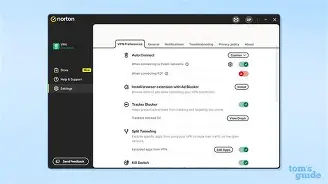
The real-world use case for Norton VPN extends beyond mere security. It is frequently used for "location spoofing," allowing users to access region-locked content or view their home streaming libraries while traveling abroad. For the laptop professional, it ensures that company assets remain behind a wall of bank-grade encryption regardless of where the work is being done. However, like the G Dock, it is not without its controversies—chiefly the debate over whether a paid VPN from a large security corporation is better than a specialized, privacy-focused niche provider.
Pros and Cons of Norton VPN
- Pro: Robust Encryption - Uses AES-256 bit encryption to ensure data remains unreadable to prying eyes.
- Pro: Public Wi-Fi Safety - Essential for anyone who works from coffee shops or travels frequently.
- Pro: Global Server Access - Allows users to bypass regional restrictions on websites and streaming services.
- Pro: Ease of Use - Features a simple interface that doesn't require deep technical knowledge to operate.
- Con: Subscription Model - Requires ongoing monthly or yearly payments rather than a one-time purchase.
- Con: Latency Issues - Can slow down internet speeds, which is detrimental for online gaming or large file transfers.
- Con: Privacy Policy Scrutiny - As a US-based company, some privacy purists worry about data logging policies compared to offshore providers.
Direct Comparison: Hardware Power vs. Software Security
To better understand which of these products deserves your budget, we must examine how they impact the laptop experience across different categories. The following table highlights the fundamental differences in their utility.
| Feature | Gtbox G Dock eGPU | Norton VPN |
|---|---|---|
| Primary Goal | Graphic Performance Boost | Data Privacy & Security |
| Connection Type | Physical (Thunderbolt/OCuLink) | Virtual (Software App) |
| Initial Cost | High ($300+ for dock, plus GPU) | Low (Monthly/Annual subscription) |
| System Impact | Decreases CPU Heat, Increases FPS | Increases Latency, Minimal CPU Usage |
| User Expertise | Moderate (Hardware Installation) | Low (One-click setup) |
| Portability | Stationary / Desk-bound | Fully Mobile (Works anywhere) |
| Target Audience | Gamers, Editors, Architects | Travelers, Remote Workers, Private Users |
The Buying Guide: Which One Do You Actually Need?
Buying either of these products without a clear strategy is a recipe for buyer's remorse. The "Gtbox G Dock vs Norton VPN" debate isn't about which product is better in a vacuum, but which one solves the specific friction points in your daily laptop usage. Use the following criteria to determine your priority investment.
Identify Your Workflow Bottlenecks
Analyze what makes you frustrated with your laptop right now. If your machine freezes when you try to export a video or you are forced to play games at 720p with low settings, your bottleneck is graphical power. In this scenario, the Gtbox G Dock is the clear winner. It extends the life of your existing laptop by giving it the muscle of a desktop. Conversely, if you feel anxious every time you log into your bank account at an airport, or you frequently deal with "This content is not available in your country," your bottleneck is security and accessibility. Norton VPN is the tool to solve those digital anxieties.
Consider the "Invisible" Costs
The price tag on the box is rarely the final cost. For the Gtbox G Dock, you must factor in the price of a graphics card and potentially a higher-wattage power supply unit (PSU) if the dock Doesn't include one. You may also need to invest in a high-quality external monitor to truly see the benefits of the eGPU, as sending the signal back to the laptop's own screen can further reduce performance. For Norton VPN, the cost is the "subscription fatigue." You are entering a recurring payment cycle. While the first year is often discounted, the renewal rates can be significantly higher, making it a long-term financial commitment.
Compatibility and Infrastructure
Before purchasing the Gtbox G Dock, perform a thorough audit of your laptop's ports. Specifically, look for the "Lightning" bolt icon next to your USB-C ports (signifying Thunderbolt) or check your manufacturer's spec sheet for OCuLink support. Without these, the hardware is useless. For Norton VPN, compatibility is less of an issue, as it runs on Windows, macOS, and mobile platforms. However, you should check if your work laptop has administrative restrictions that prevent the installation of third-party VPN software, as corporate IT departments often have their own pre-installed solutions.
Looking for the best Laptops & Computers deals on Amazon?
View Offers →Sustainability and Value
The Gtbox G Dock offers incredible long-term value because it is modular. When your graphics card becomes obsolete in four years, you can simply swap it for a new one without buying a whole new laptop. This is an environmentally friendly and cost-effective way to stay on the cutting edge. Norton VPN offers a different kind of value—peace of mind. The cost of a single identity theft incident or a compromised corporate account far outweighs the annual fee of a VPN. In this sense, the VPN is an insurance policy, while the G Dock is a performance upgrade.
Advanced Use Cases: When the Two Converge
Interestingly, there is a small segment of "power nomads" who might actually require both. Imagine a traveling freelance video editor. They use Norton VPN during the day while working from a remote co-working space to ensure their client files are transmitted securely over a shared network. At night, they return to their hotel or Airbnb, plug their laptop into the Gtbox G Dock they kept in their luggage, and begin the heavy rendering process for the next day's delivery. In this "pro-mobile" setup, the VPN protects the business assets, while the G Dock provides the industrial-grade throughput required for the job.
For most people, however, one will take precedence. Students often lean toward the G Dock to turn their study laptop into a gaming machine for the weekends. Business travelers almost exclusively lean toward the VPN to maintain corporate compliance and bypass the frustrations of international web browsing. Understanding where you fall on this spectrum is the key to making a smart purchase.
Concluding Thoughts
Choosing between the Gtbox G Dock eGPU Docking Station and Norton VPN is ultimately a choice between expanding your laptop's physical capabilities or securing its digital presence. The Gtbox G Dock is a transformative piece of hardware that tears down the walls of what a portable computer can achieve, offering a path to high-end gaming and professional-grade creative work without the need for a bulky tower. It is a loud, powerful, and physical solution to the problem of performance limitations.
Norton VPN, meanwhile, is a silent, invisible guardian. It doesn't make your laptop feel faster—in fact, it might make it feel a bit slower—but it makes your digital life significantly safer. It recognizes that in the modern world, your data is often more valuable than the hardware it sits on. It is the solution for the user who values privacy, freedom of access, and security above all else.
Before you spend your money, look at your desk and look at your browser. If your desk is empty and your laptop is struggling with games, go for the Gtbox G Dock. If your browser is constantly on public networks and you feel exposed, Norton VPN is the priority. Both products are excellent at what they do, but they serve two very different masters: one serves the need for power, and the other serves the need for peace of mind. By identifying your primary pain point, you can ensure that your next purchase is an investment in your productivity rather than just another gadget on the shelf.