Don't Buy the Audio Pro Addon C10 MkII Until You Read This Full Analysis
Introduction
In the rapidly evolving world of wireless home audio, few brands have maintained as consistent a design language and sonic identity as Audio Pro. The Swedish manufacturer has carved out a significant niche by blending Scandinavian minimalism with a "drums-first" acoustic philosophy that prioritizes punch, timing, and musicality. The Audio Pro Addon C10 MkII represents the pinnacle of their standard bookshelf-sized multi-room range, serving as the direct successor to the highly acclaimed original C10. While its predecessor was widely regarded as one of the best-sounding wireless speakers in its price bracket, the MkII arrives in a market that is more crowded and technically demanding than ever before.
Today’s consumers are no longer satisfied with just a Bluetooth connection and a power cord. They demand ecosystem flexibility, seamless streaming integration, and the ability to bridge the gap between legacy hi-fi equipment and modern digital convenience. The C10 MkII promises to answer these demands by introducing a "triple-threat" of streaming protocols while retaining the physical charm and acoustic power that made the original a favorite among audiophiles. however, at its current price point and given its specialized acoustic profile, it is not a universal solution for every listener. This analysis explores the technical nuances, real-world performance, and competitive positioning of the C10 MkII to determine if it truly earns its place in a modern home.
Design and Physical Build Quality
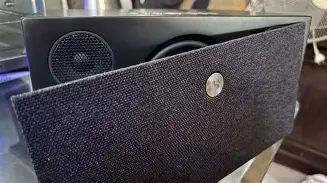
The design of the Audio Pro Addon C10 MkII is an exercise in restraint. Eschewing the aggressive plastic curves or fabric-wrapped cylinders common in the mass market, Audio Pro opts for a rectangular, wooden cabinet with a textured paint finish. The aesthetic is often described as "koala-like" due to the arrangement of the twin tweeters and the central woofer, though the MkII introduces a significant change in the form of a magnetic fabric grille. This allows users to choose between the classic, industrial look of exposed drivers or a more discreet, furniture-like appearance that blends into a bookshelf or sideboard.
The build quality is exceptionally solid. Weighing in at nearly four kilograms, the speaker feels dense and inert, which is a critical factor in preventing cabinet resonance during high-volume playback. The top-mounted control panel is crafted from brushed aluminum, featuring tactile buttons for volume, playback, and six customizable presets. Unlike many competitors that rely exclusively on smartphone apps or capacitive touch surfaces that are prone to fingerprints, the C10 MkII offers a satisfying physical interface. It feels like a piece of high-quality hi-fi equipment rather than a disposable tech gadget.
One notable physical omission in the MkII is the leather handle that adorned the original C10. While this makes the speaker look sleeker and more symmetrical, it also signals a shift in the speaker's intended use. This is not meant to be a portable device moved from room to room—it is a stationary anchor for a room's audio. The lack of a battery confirms this; the C10 MkII is strictly mains-powered, designed to deliver consistent performance without the compromises of power management.
Connectivity and Streaming Features
The "MkII" designation is most justified by the overhaul of the speaker’s internal hardware. The original C10 was largely tied to the proprietary Audio Pro app, which, while functional, lacked the polish of competitors like Sonos. With the MkII, Audio Pro has opened the gates. The speaker now supports three major wireless ecosystems: Google Cast (Chromecast), Apple AirPlay 2, and the Audio Pro Multi-room system. This is a game-changer for households with multiple users or mixed-device environments. An iPhone user can stream via AirPlay 2 while an Android user in the same house can use Chromecast, and both can be grouped with other compatible speakers regardless of the brand.
In addition to these protocols, the speaker includes Spotify Connect and Tidal Connect, allowing for direct streaming from the native apps which often provide a better user experience than third-party aggregators. Bluetooth 4.2 remains available for quick ad-hoc connections, though it is clearly positioned as a fallback rather than the primary listening method given the superior sound quality offered by Wi-Fi streaming. On the physical side, the C10 MkII retains a pair of RCA inputs, which is a vital feature for those looking to connect a turntable (provided it has a built-in phono stage) or a CD player. It also features a dedicated subwoofer output, allowing the C10 MkII to act as the "brain" of a more powerful 2.1 system.
Acoustic Performance and Sound Signature
If there is one reason to buy the C10 MkII over its more feature-rich competitors, it is the sound. The speaker utilizes a digital Class D amplifier delivering 2 x 20W to the pair of 1-inch textile dome tweeters and 40W to the 5.25-inch long-throw woofer. This 80W total output is managed by sophisticated Digital Signal Processing (DSP) that ensures the speaker maintains its composure even as the volume reaches room-filling levels.
The sound signature is quintessentially Audio Pro: authoritative, rhythmic, and remarkably deep. The bass response is arguably the best in its class. It doesn't just provide a "thump"; it offers texture and speed. When listening to bass-heavy genres like electronic or hip-hop, the C10 MkII moves air in a way that suggests a much larger cabinet. However, the bass is well-controlled enough that it doesn't bleed into the midrange, ensuring that vocals remain clear and articulate.
Find top-rated Audio & Headphones products at great prices.
Browse Now →The high frequencies are crisp without being sibilant. The textile dome tweeters provide a smoother roll-off than some metal dome alternatives, making the speaker comfortable for long-term listening. Where the speaker truly shines is in its sense of scale. While it is a mono-cabinet speaker, the wide placement of the tweeters and the power of the woofer create a "wall of sound" effect that can easily anchor a large living room. It lacks the true stereo separation of a pair of dedicated bookshelf speakers, but it comes closer to that "hi-fi feel" than almost any other single-box solution available today.
Real-World Use Cases
Understanding where the C10 MkII fits into a home is essential for a satisfied purchase. In a kitchen environment, the physical presets are invaluable. You can map a favorite radio station or Spotify playlist to a physical button on top of the speaker, meaning you can have music playing within seconds without ever touching your phone. In a living room, its ability to connect to a turntable via RCA makes it a great choice for those who want to mix digital convenience with a vinyl hobby without needing a bulky receiver and separate speakers.
For office use, the AirPlay 2 and Chromecast support make it a reliable companion for desktop streaming. However, its significant bass output means that if placed on a hollow desk, it can cause vibrations; using a set of isolation pads or placing it on a solid shelf is highly recommended. It is also worth noting that while the C10 MkII can be paired as a stereo set through the app, the cost of two units puts it in direct competition with high-end active bookshelf speakers which might offer a more traditional soundstage. The strength of the C10 MkII is its performance as a standalone, powerful unit.
Comparison with Competitors
To provide a clear picture of how the C10 MkII sits in the current landscape, it is helpful to compare it to the primary alternatives in the premium wireless speaker category.
| Feature/Spec | Audio Pro C10 MkII | Sonos Era 300 | Naim Mu-so Qb V2 |
|---|---|---|---|
| Connectivity | AirPlay 2, Google Cast, Bluetooth, RCA, Sub-out | AirPlay 2, Bluetooth, USB-C (Line-in via adapter) | AirPlay 2, Google Cast, Bluetooth, Optical, 3.5mm |
| Sound Profile | Deep bass, energetic, "Drums-first" | Spatial audio focus, balanced, wide imaging | Audiophile Grade, extremely refined, neutral |
| App Ecosystem | Good (Multi-protocol flexibility) | Industry Leading (Closed but seamless) | Excellent (High-res focus) |
| Design Style | Classic/Retro Minimalist | Modern/Industrial Synthetic | Luxury/Architectural |
| Primary Strength | Physical inputs and Raw Power | Smart features and Surround integration | Absolute fidelity and build luxury |
Pros and Cons
Even a highly-rated speaker like the C10 MkII has trade-offs. Prospective buyers should weigh these carefully based on their specific priorities.
- Pro: Exceptional Sound Quality - The 80W power output and large woofer provide a scale and depth of sound that rivals much larger systems.
- Pro: Protocol Flexibility - Support for AirPlay 2, Google Cast, and Audio Pro’s own system makes it future-proof and compatible with almost any device.
- Pro: Physical Connectivity - The inclusion of RCA inputs and a Sub-out is rare in this category and increases the speaker's utility.
- Pro: Timeless Design - The wooden cabinet and removable fabric grille allow it to fit into both modern and traditional decors.
- Pro: Physical Presets - Six buttons for instant access to playlists or radio stations reduce reliance on smartphone control.
- Con: No Native Voice Assistant - Unlike many competitors, this is a "dumb" speaker (though it can be controlled by a separate smart speaker).
- Con: Mono Soundstage - While powerful, a single unit cannot replicate the true stereo separation of separate speakers.
- Con: App Polishedness - While improved, the Audio Pro control app still lags behind Sonos in terms of UX and universal search features.
- Con: No Handle/Portability - Following the design change from the MkI, it is slightly harder to move around the home frequently.
Buying Guide: Is the C10 MkII Right for You?
Before committing to the C10 MkII, consider the following factors to ensure it matches your lifestyle and technical requirements.
1. Your Ecosystem Preference
If your home is already committed to the Sonos ecosystem, the C10 MkII will not integrate into your existing multi-room groups natively (unless you use AirPlay 2 to bridge them). However, if you prefer an open system where you can mix and match brands, the inclusion of Google Cast and AirPlay 2 makes the Audio Pro one of the most versatile choices available. It essentially lets the user choose the interface they prefer rather than forcing a specific app.
2. The Importance of Physical Inputs
Many modern wireless speakers have abandoned analog inputs entirely. If you own a turntable or a high-quality DAP (Digital Audio Player) and want to use your wireless speaker as a sound system for these devices, the RCA inputs on the C10 MkII are a major selling point. Most "smart" speakers require expensive adapters or proprietary hubs to achieve this.
Discover deals on Audio & Headphones — updated daily.
View Offers →3. Room Size and Placement
The C10 MkII is a high-output speaker. In a very small room, such as a small bedroom, its bass can become overbearing unless you use the EQ settings in the app to dial it back. It is most at home in medium-to-large spaces where it has room to "breathe." Because it is a rear-ported design (using a bass reflex port on the back), placing it directly against a wall will further exaggerate the bass. Leaving a few inches of clearance will result in a much tighter, more accurate sound.
4. Critical Listening vs. Background Music
If you are an analytical listener who wants to pinpoint the exact location of every instrument in a jazz quartet, no single-box speaker will fully satisfy you. You would be better served by the Audio Pro A28 or A38 active stereo pairs. However, if you want a speaker that makes music feel alive, energetic, and physically present—perfect for parties, kitchen dancing, or high-energy listening—the C10 MkII is difficult to beat.
Technical Specifications and Performance Metrics
For those who value the hard data, the C10 MkII offers impressive numbers on paper that translate well to real-world performance. The frequency range is rated from 45Hz to 22,000Hz. That 45Hz figure is particularly impressive for a speaker of this size; it means the speaker can reach the lower registers of a bass guitar or a kick drum without relying on "psychoacoustic trickery" that can make other small speakers sound bloated.
The crossover frequency is set at 2500Hz, which is a standard and effective point for a two-way design, ensuring that the woofer handles the heavy lifting of the lower midrange while the tweeters take over for the delicate high-end details. The support for high-resolution formats like FLAC and ALAC up to 24-bit/96kHz via Wi-Fi means that those who have invested in high-quality digital libraries will actually hear the benefits of those files.
Conclusion
The Audio Pro Addon C10 MkII is a refined evolution of a modern classic. It does not attempt to reinvent the wheel; instead, it fixes the only real flaw of its predecessor: connectivity. By adding Google Cast and AirPlay 2, Audio Pro has transformed a great-sounding speaker into a great-sounding speaker that is also easy to use within any modern digital workflow. It retains the physical soul of high-fidelity audio through its wooden construction and analog inputs, while embracing the convenience of the streaming era.
While the lack of an integrated voice assistant or a 360-degree spatial soundstage might deter some, these omissions are essentially the price of a more focused acoustic design. This is a speaker for people who care about the "weight" of a snare hit and the "growl" of a bass line. It is a musical instrument first and a tech product second. If you are looking for a singular wireless speaker that can dominate a room with rich, textured audio and look sophisticated while doing so, the C10 MkII remains one of the most compelling options on the market. Just ensure you have the space to let its powerful low-end shine, and you likely won't find a reason to look elsewhere.