Biggest Jlab Go Party Buying Mistakes (And How to Avoid Them)
Introduction
The Jlab Go Party positions itself as a convenient, portable solution for people who want to bring music — and a bit of spectacle — to small gatherings. For shoppers who want an affordable speaker with party-ready features, this type of product can be compelling. Yet buyers frequently make predictable mistakes when evaluating portable party speakers like the Jlab Go Party, and those mistakes can lead to disappointment: poor sound in open spaces, shorter-than-expected battery life, or a mismatch between the product’s lighting and audio capabilities.
This article explains the common buying errors people make specifically around the Jlab Go Party, why those errors matter in real-world scenarios, and how to avoid them. It includes a practical product analysis, a pros & cons list, a comparison table to set expectations against typical alternatives, and a thorough buying guide for anyone considering this model. The goal is to help shoppers make a decision that fits how they actually intend to use the speaker.
Product review and analysis: Jlab Go Party
Design and portability
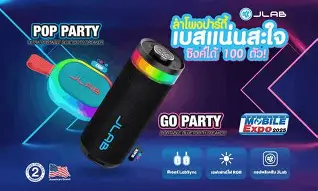
The Jlab Go Party is designed to be visibly portable and user-friendly. Buyers often appreciate compact form factors that are easy to carry from car to backyard, and the Go Party typically adheres to that philosophy: it’s lighter and smaller than a traditional full-size party speaker. The shell and materials usually favor convenience over ruggedness, which suits indoor use and controlled outdoor environments such as patios or small picnics.
Real-world use case: For someone who hosts small gatherings or wants an occasional outdoor soundtrack while hiking to a campsite, a compact shape and a handle or easy-grip surface make it simple to transport and set up quickly.
Sound performance
Sound is the most subjective element of any portable speaker, and the Go Party aims to balance volume and clarity rather than competing with large, specialized speakers. It delivers enough presence for backyard gatherings and living-room dance sessions, but buyers should temper expectations about deep, tight bass and studio-grade midrange resolution. A common pitfall is assuming a speaker’s loudness equates to sound quality; in practice, louder is not always clearer, especially in open-air environments where low-frequency performance is constrained by physical size.
Real-world use case: At a small barbecue, the Go Party can provide lively music for conversation and dancing. In a large park or crowded public space, however, the sound will spread and require higher volume levels that can strain the speaker and drain battery faster.
Battery life and charging
Battery life is one of the top practical concerns for buyers. Manufacturers often give optimistic run-time figures based on measured conditions that differ from everyday use. Typical listening patterns — higher volumes, bass-heavy tracks, and the use of built-in lighting effects — all reduce runtime. People who expect a full-day performance without recharging are often surprised.
Real-world use case: Someone planning an afternoon block party should plan for charging opportunities or bring a power bank/backup speaker if continuous playback is required. Moderating volume and disabling lights when not needed will extend runtime noticeably.
Connectivity and features
The Jlab Go Party usually offers Bluetooth as the primary wireless connection. Many buyers focus simply on whether the speaker pairs easily with phones; others care about extras like auxiliary inputs, FM radio, microphone inputs for karaoke, or the ability to pair multiple speakers. Overlooking these details leads to surprises: for example, expecting to plug in an older MP3 player only to discover no 3.5mm input, or wanting low-latency audio for video playback and finding Bluetooth latency noticeable.
Looking for the best Audio & Headphones deals on Amazon?
Shop Amazon →Real-world use case: For small karaoke sessions or announcements, a mic input and simple vocal controls are useful; buyers who ignore whether the mic is supported natively or requires adapters may be left improvising workarounds.
Durability and outdoor suitability
Durability and weather resistance are frequent decision drivers. Jlab’s Go Party-style speakers are often not built to the same waterproof or dustproof standard as heavier-duty outdoor speakers. When buyers intend to use the speaker poolside, at the beach, or during rainy events, they should verify the specific IP rating or take protective measures like shade and shelter. Assuming a party speaker is water-resistant without checking the specs is a common and costly mistake.
Real-world use case: A homeowner who wants a speaker for pool parties should either confirm an IP rating suitable for splash exposure or keep the device well away from direct water and use protective cases or elevated placement to reduce risk.
Common buying mistakes — and how to avoid them
- Confusing loudness with sound quality: Buyers often pick the loudest-sounding unit in a quick store demo. Instead, assess clarity at moderate volumes and whether the speaker distorts when turned up.
- Ignoring real-world battery conditions: Marketing battery figures are rarely measured under social-party conditions. Assume shorter runtime when using lights and at higher volume.
- Overlooking input and connectivity needs: Check whether an aux input, microphone jack, USB playback, or multi-speaker pairing is required for the intended use.
- Assuming outdoor robustness: Verify any water- or dust-resistance claims and consider protective strategies if planning pool or beach use.
- Undervaluing ergonomics: Controls, weight, handle placement, and how easy it is to change tracks or mute matter when handling a live gathering.
- Expecting advanced features without checking: Features like app-based EQ, voice assistant support, or multi-device streaming should be confirmed rather than assumed.
Pros & Cons
- Pros
- Portable and easy to move between locations
- Designed for casual social use — party lights and easy pairing
- User-friendly controls that are approachable for non-technical hosts
- Affordable relative to larger, high-power party speakers
- Cons
- Limited bass depth compared to larger systems
- Battery life can drop substantially with lights and higher volumes
- May lack advanced connectivity or rugged weatherproofing
- Not ideal for very large outdoor gatherings where SPL (sound pressure level) and projection are critical
Comparison table: How the Jlab Go Party stacks up
| Feature | Jlab Go Party (typical) | Typical Portable Party Speaker |
|---|---|---|
| Portability | Compact, light enough for casual transport | Varies: from compact to heavy-duty with wheels |
| Sound profile | Balanced for mids and highs; modest bass | Some offer deeper bass and higher maximum SPL |
| Battery | Good for a few hours in realistic use when lights are off | Ranges widely — some models prioritize long runtimes |
| Connectivity | Bluetooth primary; extras depend on model | May include Bluetooth, aux-in, mic input, USB, app control |
| Weather resistance | Usually limited — check specs | Some models are IP-rated for outdoor use |
| Extras | Party lighting, simple controls | Lighting, DJ modes, app EQ, multi-speaker pairing |
Buying guide: what to check before purchasing
1. Define the main use cases
Start with how the speaker will be used. Will it be primarily for indoor gatherings, backyard barbecues, beach trips, or occasional karaoke? The intended context affects which features are essential. For example, a mic input matters for karaoke or announcements, while higher SPL and projection matter for open outdoor spaces.
2. Evaluate sound quality for the intended space
Listen for clarity across low, mid, and high frequencies. Test with familiar tracks that represent the music that will be played at gatherings — a bass-heavy dance track and a vocal-forward singer-songwriter track reveal different strengths and weaknesses. Check for distortion in the midrange at higher volumes, and how natural vocals sound when guests speak or sing over the music.
3. Check realistic battery performance
Look for independent reviews that measure battery life under realistic conditions. Factor in that party lights, high volume, and microphone use shorten run time. If continuous day-long use is required, plan for external charging or a speaker with user-replaceable battery options.
4. Confirm connectivity that matches existing gear
Ensure the speaker has the inputs and pairing behavior needed: easy Bluetooth pairing for smartphones, aux-in for older players, mic inputs for announcements, and multi-speaker pairing if expanding coverage is a possibility. For event hosts, low-latency options are valuable when syncing music with video.
5. Understand durability and environmental limits
Inspect official IP ratings and design features that protect against spills and dust. If the product lacks adequate water resistance, plan protective measures or choose a speaker rated for the intended outdoor exposure.
Find top-rated Audio & Headphones products at great prices.
Shop Amazon →6. Examine ergonomics and control layout
Controls should be intuitive and accessible — changing tracks with wet hands or dim lighting should not be a struggle. Consider physical buttons versus app-only control, and whether carry handles or straps fit the intended portability model.
7. Look beyond marketing: read multiple reviews
Combine manufacturer specs with independent reviews and user feedback to get a complete picture. Pay attention to comments about long-term reliability, after-sales service, and firmware support — these affect ownership experience more than initial impressions.
8. Consider warranty and support
Warranty length and customer support quality are important for a device likely to see casual rough handling. Clear warranty terms and accessible support channels reduce the risk of costly repairs or replacement in the first year.
Quick pre-purchase checklist
- Does the speaker provide the input types required (Bluetooth, aux, mic)?
- Is the battery life sufficient for the longest expected session with lights on?
- Is the speaker loud and clear enough for the intended venue?
- Is there any IP rating or protective design for outdoor use?
- Are controls usable in the conditions where the speaker will be used?
- Do independent reviews back up the manufacturer’s claims?
- Is customer support and warranty coverage acceptable?
Real-world scenarios and recommendations
For indoor house parties and small gatherings, the Jlab Go Party’s compactness and approachable controls make it an excellent choice. It provides lively sound and friendly aesthetics without overwhelming the room. For small outdoor events (backyard barbecues or picnics), it performs well when the listening area is modest and placement is close to guests.
For larger outdoor events, long playtimes, or heavy bass music fans, consider either multiple units paired together or a larger system designed for sustained high-SPL output and deeper bass. If poolside use is frequent, prioritizing a model with an IP rating designed to withstand splash exposure will reduce the chance of accidental damage.
Conclusion
The Jlab Go Party can be a sensible, budget-friendly choice for people who want a portable, party-ready speaker for casual social use. Many buying mistakes stem not from the product itself but from mismatched expectations: expecting a compact speaker to perform like a full-size PA system, or assuming manufacturer battery claims will hold under party conditions.
Approach the purchase by defining clear use cases, testing sound and controls with real music, verifying connectivity and durability for the intended environment, and factoring realistic battery life into planning. With intentional selection and sensible expectations, the Jlab Go Party can deliver enjoyable sound and convivial atmosphere for the right kinds of gatherings.